Spinning Demonstration
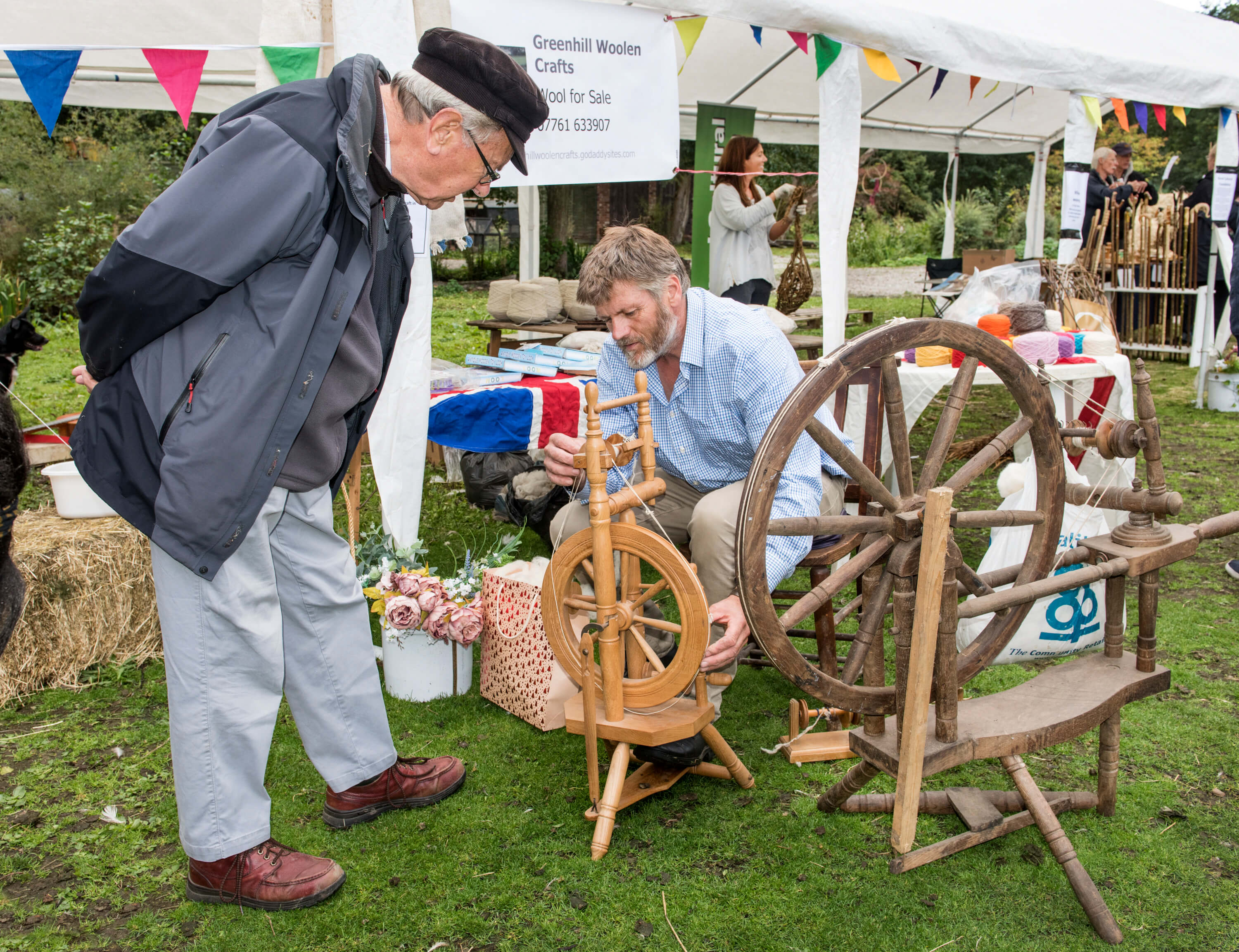
Local sheep farmer Devlin demonstrated the processes involved in converting fleece to fabric. Sheep are sheared once a year by professionals who shear the whole fleece in one piece. The fleece is examined and graded according to the length, diameter, strength, crimp and color of its individual fibers. This is called classing.
Raw fleeces contain lanolin, which makes them greasy, and they will still hold vegetable matter from the fields. Scouring cleans the wool and removes the lanolin by raking it in baths of hot water, detergent and alkali. The wool is rinsed, squeezed by rollers and dried.
To make wool from multiple fleeces more regular in fiber size and color, the clean wool from different batches is mixed. This is called blending.
Next the wool is carded. This smooths the fibers by brushing the wool over a series of pointed teeth, so the fibers are aligned into a fine web. After carding, the wool is gently twisted into ropes, ready for spinning. Once spun the yarn can be knitted or woven into fabric on looms. Different patterns are created by lifting the warp threads in different sequences and by using different colored yarns.
Wool can be dyed before carding or after being spun into yarn, or the finished fabric can be dyed.