Willow Weaving
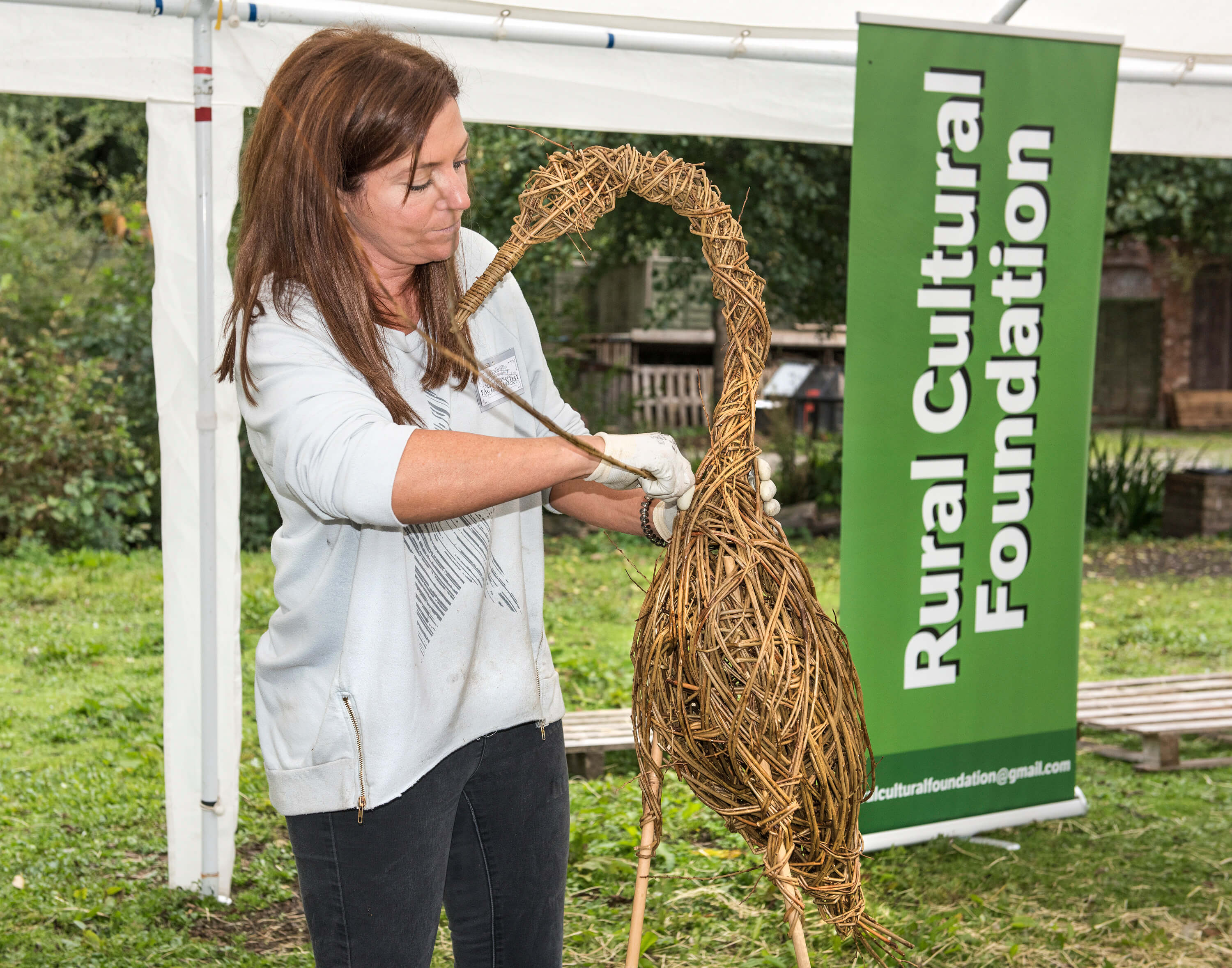
Most willow species grow and thrive close to water or in damp places, and willow beds (called osier beds) were created and planted by Samuel Oldknow in the canal like strips of water which surround the main lake at the Roman Lakes. These willows would be regularly coppiced to retain a supply of willow whips.
Uses for willow wood included house building, coracle frames, and charcoal manufacture. But wicker-work is what willow is most famous for, using the smaller osiers and coppiced or pollarded willow. Before the advent of plastics, willow was widely used to make a variety of containers, from general basketry to specialised applications such as lobster pots and bee hives.
This willow weaving demonstration formed part of our Rural Life@ Rural Skills open day and was led by local expert Sarah who trained in sculpture at Southampton University and the world-famous Accademia di Belle Arti in Venice. Sarah created a willow heron sculpture which all group participants had the opportunity of recreating in the upcoming free workshop.